

Condo vs. Apartment: What’s the Difference?
If you’ve ever searched for a new place to live, you’ve probably come across the words “condo” and “apartment.” They often appear side by side in listings, brochures, and ads.
Even though the names sit next to each other, the way they work and what they actually are is very different. This difference can affect how much you pay each month, what rules you follow, and even how much freedom you have inside your own space. Many people get surprised by the details once they sign a lease or a mortgage.
Before you decide which one fits your life, it helps to know the real differences. In this guide, we’ll slowly break down what sets condos apart from apartments, how each one works, and what that means for your wallet and your lifestyle.
Key Differences of a Condo and Apartment
What Is a Condo?
A condo (short for condominium) is a single unit inside a larger building or community. Think of it like owning an apartment but with added responsibilities. Each unit in a condo building is owned by an individual. This means the person living there may be the owner themselves or someone renting from that owner.
When you buy a condo, you own everything inside your unit — walls, floors, and all. But the hallways, elevators, gyms, and swimming pools? Those belong to everyone as shared spaces. A group called a Homeowners Association (HOA) manages these common areas, makes the rules, and collects fees from each owner to keep everything running.
Condos are popular for people who want to own property but don’t want to deal with maintaining a whole house. They’re also common in cities, where space is limited but demand for ownership is high.
What Is an Apartment?
An apartment is a living space inside a building owned by a single landlord or a property management company. Instead of owning the unit, you rent it. This means you sign a lease, pay monthly rent, and follow the rules set by the landlord.
Unlike condos, where each unit has a different owner, all the apartments in a building usually belong to one owner. The landlord or management company is responsible for the big things like the roof, hallways, plumbing systems, and even repairs inside your unit (unless you caused the damage).
Apartments are a popular choice for people who want flexibility. They’re great for short-term living, moving between cities, or for those who don’t want to handle property taxes or maintenance fees.
Main Differences Between a Condo and an Apartment (Pros and Cons)
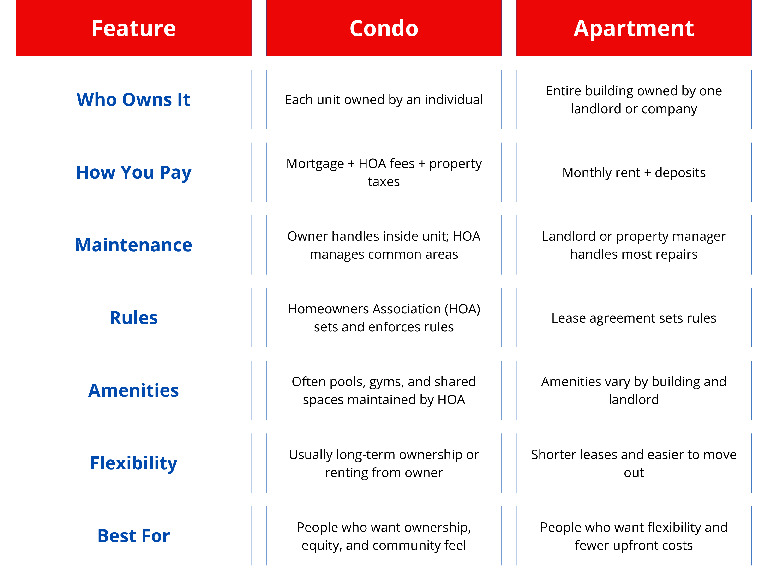
Condos and apartments often look alike from the outside, but the biggest difference is ownership. A condo is owned by an individual. That person might live there themselves or rent it out to someone else. An apartment, on the other hand, is usually part of a building owned by one landlord or a property management company, and you rent directly from them.
Because of this ownership split, the way money changes hands also differs. Condo owners pay for their mortgage, property taxes, and monthly HOA fees. If you rent a condo, you’ll pay the unit owner directly, which might include some utilities. In an apartment, tenants typically pay monthly rent and deposits to the landlord or management company, and those payments cover most shared costs.
Maintenance works differently, too. In a condo, the owner is responsible for repairs inside the unit, while the HOA manages common spaces such as hallways, gyms, and pools. In an apartment, the landlord or management company takes care of most repairs and maintenance, both inside and outside the unit, unless the damage was caused by the tenant.
Rules also vary. Condos are governed by a Homeowners Association (HOA), which sets and enforces rules that can differ from one property to another. Apartments are governed by a lease agreement that applies to all tenants in the building.
Customization is another key difference. Condo owners typically have more freedom to update or remodel their units, such as changing flooring, painting walls, or upgrading fixtures, as long as they follow HOA guidelines. Apartment tenants, on the other hand, usually face stricter limits. Most landlords allow only minor changes, like hanging pictures or adding removable décor, but anything permanent typically isn’t allowed without permission.
Amenities can overlap but are often handled differently. Condos tend to have pools, gyms, and shared spaces managed by the HOA, while apartments may have simpler or fewer amenities depending on the landlord. Finally, flexibility is a major dividing line: condos are often tied to ownership or long-term rentals, while apartments offer short leases and make moving easier.
If you’re thinking about where to live, ask yourself:
- Do you want to own a place and build equity? (Condo)
- Or do you want the flexibility of renting with less responsibility? (Apartment)
Costs and Fees
Money plays a big role when choosing between a condo and an apartment. While both may look similar from the outside, the way you pay for them is very different.
Condos usually involve more than just a single monthly payment. If you’re buying a condo, you’ll pay a mortgage, property taxes, homeowners insurance, and monthly HOA fees. The HOA fees cover the upkeep of shared spaces such as hallways, elevators, and amenities like pools or gyms. If you’re renting a condo from an individual owner, your rent might also include some utilities or fees, depending on the owner’s setup.
Apartments, on the other hand, are generally simpler. Tenants pay a monthly rent to the landlord or property management company, plus a security deposit before moving in. Utilities may or may not be included in the rent, depending on the lease. There are no HOA fees, and tenants don’t have to pay property taxes or insurance beyond renters insurance, which is usually optional but recommended.
When comparing the two, it helps to think of it this way:
- Condos: Higher upfront and ongoing costs but potential to build equity and own an asset.
- Apartments: Lower upfront costs, easier budgeting, and less financial responsibility but no ownership or equity.
Lifestyle Factors to Consider
Choosing between a condo and an apartment isn’t only about money — it’s also about the kind of life you want to live. Even if both options fit your budget, the day-to-day experience can feel very different.
If you value ownership and stability, a condo may be a better fit. Owning your unit can give you a sense of permanence, a chance to build equity, and the ability to customize your space. You’re also more likely to have long-term neighbors, which can make the community feel familiar and stable.
If you prefer flexibility and ease, an apartment might be the way to go. Renting allows you to move with less hassle, sign shorter leases, and avoid the responsibilities of property taxes and HOA meetings. It’s also ideal if you’re unsure about settling in one place or don’t want to commit to a mortgage yet.
Which Is More Expensive?
Condos usually carry higher upfront and ongoing costs. If you buy one, you’ll pay a down payment, mortgage, property taxes, and homeowners insurance. On top of that, you’ll have monthly HOA fees, which cover the upkeep of shared spaces and amenities. Even if you’re renting a condo from an owner, the rent may be higher than a comparable apartment because the owner needs to cover these costs.
Apartments, on the other hand, tend to have lower upfront costs. You typically only pay a security deposit and the first month’s rent to move in. There are no HOA fees and no property taxes, and renters insurance is often much cheaper than homeowners insurance. However, apartments can become more expensive over time if rent increases each year or if utilities aren’t included.
Which Is More Expensive?
The price you pay for a home isn’t just about the monthly bill, it’s also about what you get in return. Condos and apartments both cost money, but they do it in different ways and on different timelines.
Condos often feel more expensive at first because you’re paying a down payment, a mortgage, property taxes, and HOA fees. But over time, those payments build equity and ownership. Instead of your money disappearing each month, part of it goes toward something you own — an asset you can sell or rent out later. This makes condos more cost-effective in the long run for people who plan to stay in one place or invest in property.
Apartments, on the other hand, are typically cheaper at the start. You usually only need a security deposit and the first month’s rent to move in. There’s no HOA fee and no property tax, and renters insurance costs far less than homeowners insurance. But rent payments don’t build equity. When you leave, you walk away with no ownership, no resale value, and often higher rent if you renew your lease.
Discover Amazing Sioux City Properties
Explore unique homes, commercial spaces, and investment opportunities in Sioux City. Find the perfect property to fit your lifestyle or business vision.
Browse Our ListingsRecent Blogs and Insights

How Much House Can I Afford?
Apply the 28/36 rule: spend up to 28% of gross income on housing and no more than 36% on total debt, including housing and other monthly obligations.
Read MoreHow Much House Can I Afford?
How to Determine the Value of Your Home Yourself
Compare recent sales of similar homes nearby, adjust for location perks or nuisances, and get a professional appraisal for an exact figure.
Read MoreHow to Determine the Value of Your Home Yourself
Are Home Improvements Tax Deductible? What Homeowners Should Know
The honest answer is mostly no, but with a few exceptions. The IRS doesn't lump all home-related spending into one category. Some of it counts as a repair, some of it counts as an improvement, and those two words matter a lot more than you'd think when it comes to what you can and can't write off.
Read MoreAre Home Improvements Tax Deductible? What Homeowners Should Know
All Your Money Going to the House? What House Poor Means
At its core, being house poor means you have just enough money to cover your house expenses, and not much else
Read MoreAll Your Money Going to the House? What House Poor Means
How To Price My House to Sell Quick
To price your house to sell quickly, start with a comparative market analysis (CMA), set a price slightly below similar homes, avoid overpricing because of personal bias, avoid pricing too low and creating suspicion, and make sure as many buyers as possible see your listing through social media, community groups, and online ads.
Read MoreHow To Price My House to Sell Quick
What Happens If I Don't Have Earnest Money?
Earnest money is a deposit that shows a seller you are serious about buying their home. While it is not legally required in every real estate transaction, most sellers expect buyers to include it when making an offer.
Read MoreWhat Happens If I Don't Have Earnest Money?
Can You Cancel a Real Estate Contract Without Penalties? Understanding Mutual Rescission
Mutual rescission is when the buyer and seller both agree to cancel a real estate purchase agreement. Instead of completing the sale, they decide together to end the contract before the transaction is finished.
Read MoreCan You Cancel a Real Estate Contract Without Penalties? Understanding Mutual Rescission
How Much Are Realtors Paid in Iowa?
The average total real estate commission in Iowa is around 5.84%, but the actual rate can vary depending on the agent, brokerage, property, and local market.
Read MoreHow Much Are Realtors Paid in Iowa?
What Is the 3-3-3 Rule in Real Estate?
The 3-3-3 rule in real estate is a simple guideline that helps homebuyers prepare for the financial responsibilities of owning a home.
Read MoreWhat Is the 3-3-3 Rule in Real Estate?
What Is an Assignment Contract in Real Estate and How Does It Work?
An assignment contract lets a buyer transfer their rights in a real estate deal to another buyer for an agreed fee or profit.
Read MoreWhat Is an Assignment Contract in Real Estate and How Does It Work?
What Is a Lease Agreement? Everything Renters and Landlords Should Know
A lease agreement is a legal contract between a landlord and tenant that explains rent, rules, and how long the property can be used.
Read MoreWhat Is a Lease Agreement? Everything Renters and Landlords Should Know
Can You Legally Ask Someone to Act on Your Behalf? Power of Attorney Explained
A power of attorney gives someone legal authority to act on another person’s behalf in financial, legal, or real estate matters.
Read MoreCan You Legally Ask Someone to Act on Your Behalf? Power of Attorney Explained