

First Time Buyer Tips

How Much House Can I Afford?
Apply the 28/36 rule: spend up to 28% of gross income on housing and no more than 36% on total debt, including housing and other monthly obligations.
Read MoreHow Much House Can I Afford?
What Is the 3-3-3 Rule in Real Estate?
The 3-3-3 rule in real estate is a simple guideline that helps homebuyers prepare for the financial responsibilities of owning a home.
Read MoreWhat Is the 3-3-3 Rule in Real Estate?
Can You Legally Ask Someone to Act on Your Behalf? Power of Attorney Explained
A power of attorney gives someone legal authority to act on another person’s behalf in financial, legal, or real estate matters.
Read MoreCan You Legally Ask Someone to Act on Your Behalf? Power of Attorney Explained
How to Do a Title Search in Real Estate
First check online records, then visit your local recorder/assessor’s office, or hire a title company or lawyer to do a full title search for accuracy recommended.
Read MoreHow to Do a Title Search in Real Estate
Liens and Encumbrances in Real Estate
A lien is a legal claim placed on a property because someone owes money. An encumbrance, on the other hand, refers to any rule, right, or limitation that affects how a property can be used or transferred.
Read MoreLiens and Encumbrances in Real Estate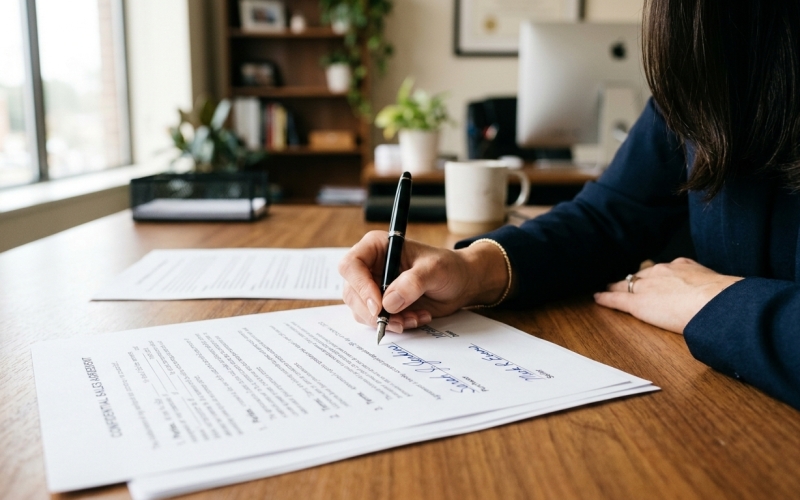
Purchase Agreement vs. Offer: What Homebuyers Need to Know
The offer is the start of negotiation, while the purchase agreement is the official deal that follows once both sides agree.
Read MorePurchase Agreement vs. Offer: What Homebuyers Need to Know
Contingent vs. Pending: What’s the Difference in Real Estate?
A contingent home means it is already under contract, but there are still important conditions that must be met before the sale can move forward. In a pending home most or all of the conditions have already been cleared
Read MoreContingent vs. Pending: What’s the Difference in Real Estate?
What Happens After the Purchase Agreement Is Signed?
Once your offer is accepted and the purchase agreement is signed, you are now considered under contract. This means both the buyer and the seller have agreed on the terms of the sale, and both parties are legally committed to moving forward with the transaction.
Read MoreWhat Happens After the Purchase Agreement Is Signed?
What Is a Purchase Agreement?
A purchase agreement is a written contract between a buyer and a seller that explains the terms and conditions of a real estate sale.
Read MoreWhat Is a Purchase Agreement?
What Is Escrow in Real Estate? A Simple Guide for Homebuyers
Escrow is a safe holding place for money and important documents during a real estate transaction.
Read MoreWhat Is Escrow in Real Estate? A Simple Guide for Homebuyers
Can I Back Out in a Purchase Agreement or an Offer?
If you send an offer but the seller has not signed it yet, you usually still have control. You can withdraw your offer if you change your mind. In most cases, there is no penalty because the seller has not accepted your terms yet.
Read MoreCan I Back Out in a Purchase Agreement or an Offer?
Earnest Money: What It Is, How It Works, and Why It Matters
Earnest money, also called a good faith deposit, is money a homebuyer pays after the seller accepts their offer. It shows the seller, “I’m serious about buying this home.”
Read MoreEarnest Money: What It Is, How It Works, and Why It MattersShowing listings 1 to 12 of 25
Search





GET IN TOUCH

Subscribe To Our Newsletter
The newsletter is sent periodically and will update you on the latest real estate news and offers.
