

Purchase Agreement vs. Offer: What Homebuyers Need to Know
Offer vs. Purchase Agreement: The Quick Difference
The offer is the start of negotiation, while the purchase agreement is the official deal that follows once both sides agree.
An offer is what a buyer submits to the seller showing interest in the property, outlining the desired purchase price, terms, and conditions. At this stage, the seller has the choice to accept, reject, or counter the buyer’s proposal.
A purchase agreement, on the other hand, only happens when the seller accepts the buyer’s offer and signs it. This is what the official agreement or contract will then be called.
The two are just stages of the home-buying process, and sometimes there is a misconception between the two that is common in first-time home buyers. However, it should be understood that only when the purchase agreement is signed will it be legally binding.
What Is an Offer in Real Estate?
An offer in real estate is a simple proposal to buy a home and is the first step in the homebuying process that initiates the entire transaction. It is required by law under the Statute of Frauds that real estate contracts must be written, and since an offer is one, it must be written. Most of the time, buyers hire a buyer’s agent to handle drafting an offer for them, although it is not legally required but also has other benefits such as negotiating on your behalf and pricing strategies.
A typical offer includes several key details:
- The purchase price the buyer is willing to pay
- The financing details, such as whether the buyer is using a mortgage or paying cash
- Any contingencies, like home inspection or financing approval
- The proposed closing date, or when the buyer hopes to complete the purchase
Once the offer is submitted, the seller has a few options. They can:
- Accept the offer as it is
- Reject it completely
- Or counteroffer, meaning they suggest changes to the terms
Is Making an Offer Required?
Yes, in US real estate, buyers are required to submit a formal offer, and it has always been a standard step because in dealing with properties as large as a house, parties cannot use verbal agreements. And to every property you are interested in, you will have to make an offer to each one. Without the offer, the home buying process will never officially start.
An important note to first-time homebuyers is that according to some accounts on Reddit, an offer is not accepted right away. There are people who discussed that their offer got accepted on the second try, some on the fifth, and some on the first. This does not automatically increase your agent’s fee. Instead, it depends on how much your agreed price is in your Buyer’s Representation Agreement. The usual commission for a buyer's agent is 2.5% to 3.0% of the home purchase price.
What Is a Purchase Agreement?
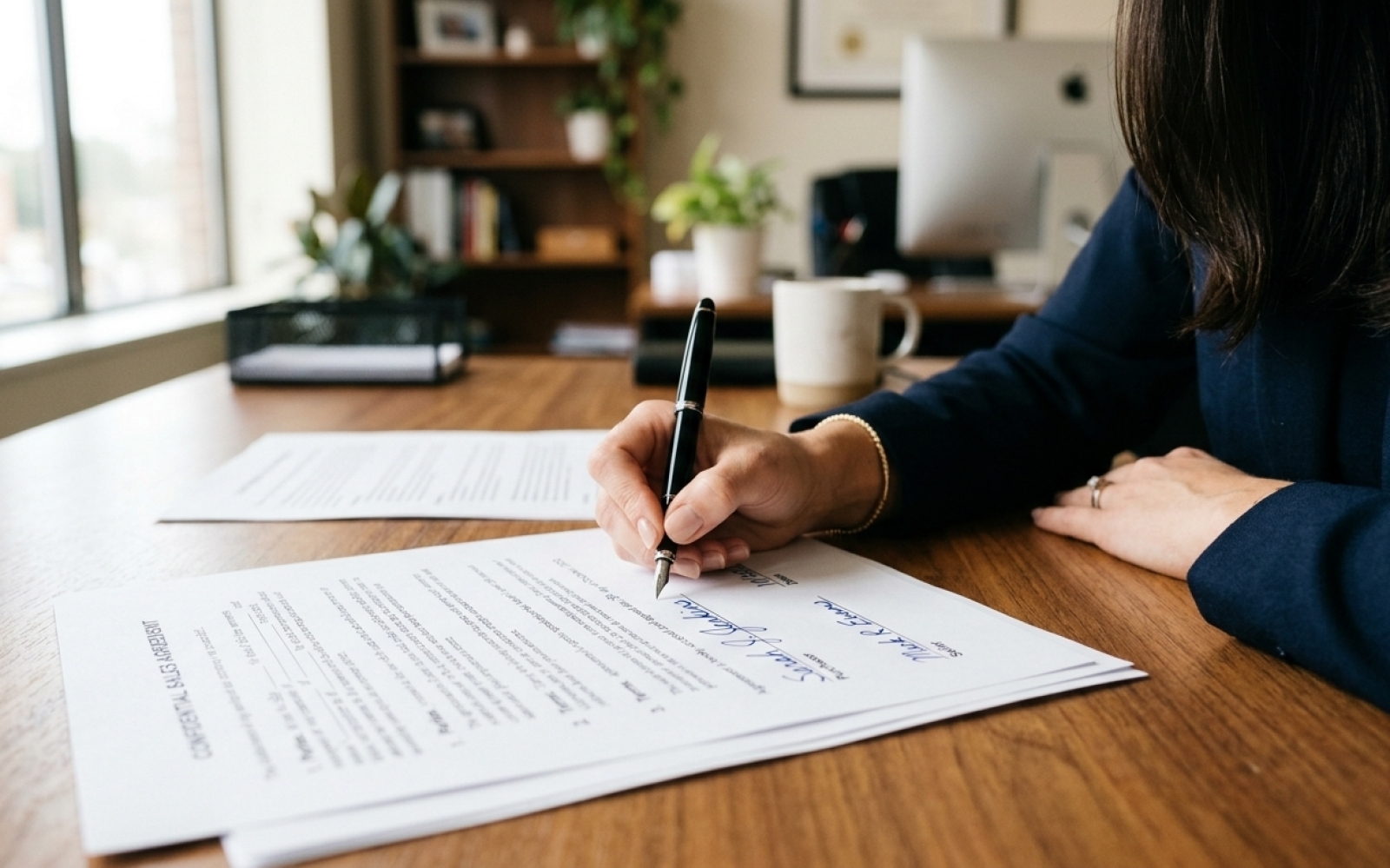
A purchase agreement is a signed contract between the buyer and the seller that confirms the terms of a home sale. This document is created when the seller accepts the buyer’s offer and would want to proceed with the sale. For this document to be binding, it must be written in form and must be signed by both parties. If there are two or more persons in either party, each one must sign.
At this stage, the negotiations are complete, and both parties must follow what is agreed upon in the purchase agreement; otherwise, there would be consequences such as losing the earnest money or litigation.
This agreement usually includes several important details:
- The final purchase price that both parties agreed on
- The agreed terms and timelines, including deadlines for inspections, financing, and closing
- Any contingencies, along with their specific deadlines (such as inspection or loan approval conditions)
- The responsibilities of both the buyer and seller, outlining what each party must complete before closing
Even after signing, it is common for buyers to experience “buyer’s remorse," and it will make buyers back out of the sale. This might be an honest feeling for the buyer, but this will not be a valid reason to cancel the purchase since it is already binding at this point. This stage is also called “under contract”.
Step by Step Process of How it Works
Step 1: Buyer submits an offer
Step 2: Seller reviews the offer
Step 3: Negotiation or counteroffer (if needed)
Step 4: Offer is accepted
Step 5: Purchase agreement is signed
Can Others Outbid a Buyer’s Offer After It’s Accepted?
No, once the offer is accepted, the agreement stands regardless if there are other higher offers. Seller have the option to still show their property on the market after they have already accepted an offer. sometimes if they feel good about the transaction, they will no longer show the property on the listing systems, otherwise called “contingent: no-show." This also means that the property is ongoing the completion of such conditions and doesn't want showings to other people. There is also an opposite to this called “contingent: continue to show” where the seller still accept other potential buyers for showings.
Kick-Out Clause
In relation to backup offers, some purchases have a kick-out clause that allows the sellers to “kick-out” the buyer if certain conditions aren’t met. It is usually tied to buyers having to sell their home first as a contingency according to Rocket Mortgage.
Backup Offers
A buyer’s offer is protected by law in the most fundamental way. Binding agreements should be followed through, which is why sellers can accept other offers, but they won’t be in effect unless the current agreement falls through. Sellers may receive a much higher offer but are not able to break contract, according to Realtor.
Can You Back Out of an Offer or Purchase Agreement?
Yes, at all times, but there is a big risk and will be difficult depending on what stage you are in because it is all about the timing.
If the buyer is still dealing with an offer, backing out is allowed as long as it has not yet been accepted by the seller. Since this is all about still trying to get into an agreement, there is no contract yet that binds parties to act. Walking away at this stage will not cause you any financial harm.
Once the purchase agreement is signed, it gets very difficult to walk away. Not only is the buyer not allowed to back out but also the seller, because both parties are expected to follow through with the contract. Unless both parties agree to walk away, which is called a mutual rescission or a mutual cancellation. The earnest money can also be negotiated. Some sellers agree to the cancellation but want the earnest money for the lost time and opportunity. Some agree for both parties to walk away without consequences, but sellers are not commonly found to be cooperative with mutual cancellation.
It is common for the buyer to get cold feet, especially when the contract was just signed; it is important to communicate this to the real estate agent and to the seller as well as an act of good faith but you should expect that the earnest money will be forfeited since the contract is already binding.
Bottom Line
Offers and purchase agreements are two different documents, but they represent a stage in the home buying process. The offer comes first before the purchase agreement is initiated.
Once the purchase agreement is signed, walking away is neither easy nor cheap; however, it helps to communicate having cold feet to your realtor and the seller at the earliest time possible, hoping that the seller might agree to the cancellation.
Always expect the worst when this situation arises and also expect that the earnest money will be forfeited. But as long as the agreement is not yet signed, you are free to walk away as you like.
Discover Amazing Sioux City Properties
Explore unique homes, commercial spaces, and investment opportunities in Sioux City. Find the perfect property to fit your lifestyle or business vision.
Browse Our ListingsRecent Blogs and Insights

How Much House Can I Afford?
Apply the 28/36 rule: spend up to 28% of gross income on housing and no more than 36% on total debt, including housing and other monthly obligations.
Read MoreHow Much House Can I Afford?
How to Determine the Value of Your Home Yourself
Compare recent sales of similar homes nearby, adjust for location perks or nuisances, and get a professional appraisal for an exact figure.
Read MoreHow to Determine the Value of Your Home Yourself
Are Home Improvements Tax Deductible? What Homeowners Should Know
The honest answer is mostly no, but with a few exceptions. The IRS doesn't lump all home-related spending into one category. Some of it counts as a repair, some of it counts as an improvement, and those two words matter a lot more than you'd think when it comes to what you can and can't write off.
Read MoreAre Home Improvements Tax Deductible? What Homeowners Should Know
All Your Money Going to the House? What House Poor Means
At its core, being house poor means you have just enough money to cover your house expenses, and not much else
Read MoreAll Your Money Going to the House? What House Poor Means
How To Price My House to Sell Quick
To price your house to sell quickly, start with a comparative market analysis (CMA), set a price slightly below similar homes, avoid overpricing because of personal bias, avoid pricing too low and creating suspicion, and make sure as many buyers as possible see your listing through social media, community groups, and online ads.
Read MoreHow To Price My House to Sell Quick
What Happens If I Don't Have Earnest Money?
Earnest money is a deposit that shows a seller you are serious about buying their home. While it is not legally required in every real estate transaction, most sellers expect buyers to include it when making an offer.
Read MoreWhat Happens If I Don't Have Earnest Money?
Can You Cancel a Real Estate Contract Without Penalties? Understanding Mutual Rescission
Mutual rescission is when the buyer and seller both agree to cancel a real estate purchase agreement. Instead of completing the sale, they decide together to end the contract before the transaction is finished.
Read MoreCan You Cancel a Real Estate Contract Without Penalties? Understanding Mutual Rescission
How Much Are Realtors Paid in Iowa?
The average total real estate commission in Iowa is around 5.84%, but the actual rate can vary depending on the agent, brokerage, property, and local market.
Read MoreHow Much Are Realtors Paid in Iowa?
What Is the 3-3-3 Rule in Real Estate?
The 3-3-3 rule in real estate is a simple guideline that helps homebuyers prepare for the financial responsibilities of owning a home.
Read MoreWhat Is the 3-3-3 Rule in Real Estate?
What Is an Assignment Contract in Real Estate and How Does It Work?
An assignment contract lets a buyer transfer their rights in a real estate deal to another buyer for an agreed fee or profit.
Read MoreWhat Is an Assignment Contract in Real Estate and How Does It Work?
What Is a Lease Agreement? Everything Renters and Landlords Should Know
A lease agreement is a legal contract between a landlord and tenant that explains rent, rules, and how long the property can be used.
Read MoreWhat Is a Lease Agreement? Everything Renters and Landlords Should Know
Can You Legally Ask Someone to Act on Your Behalf? Power of Attorney Explained
A power of attorney gives someone legal authority to act on another person’s behalf in financial, legal, or real estate matters.
Read MoreCan You Legally Ask Someone to Act on Your Behalf? Power of Attorney Explained