

Iowa Property Taxes of 2025

Key Points:
- Property taxes in Iowa fund essential local services such as education, infrastructure, and emergency services.
- Taxes are assessed based on the property's market value, determined annually by county assessors.
- Payments are due in two installments: the first by September 30th and the second by March 31st.
- Various credits and exemptions, like the Homestead Tax Credit, can reduce tax liabilities for eligible homeowners.
- Homeowners can appeal assessments they believe are inaccurate through a structured process.
Table of Contents:
- Introduction
- What Are Property Taxes?
- How Are Property Taxes Assessed in Iowa?
- Understanding Your Property Tax Statement
- Payment of Property Taxes
- When Are Property Taxes Due?
- How to Pay Your Property Taxes
- When Are Property Taxes Due?
- Property Tax Credits and Exemptions
- Homestead Tax Credit and Exemption
- Military Service Exemption
- Other Available Credits
- Homestead Tax Credit and Exemption
- What to Do If You Disagree with Your Assessment
- Resources for Iowa Homeowners
- Conclusion
- FAQs
Paying taxes on properties is a common knowledge for everyone but, the laws that govern the taxes that we pay change from time to time and it also depends on what state you are in.
Taxes are essential for the government to continue doing its services and use those taxes to improve our quality of life. From roads, to schools and even the raw materials we use and consume everyday take taxes before it reaches our hands.
This blog will guide you through the updated facts regarding the property taxes in iowa this year of 2025.
What Are Property Taxes?
Property taxes are annual charges homeowners pay based on the value of their property. Taxes allow us to enjoy the things we have today. They are funds that the government acquire for the development of the economy and quality of life that we all enjoy today. Things such as public education, infrastructure, food, and emergency response services are products of well spent taxes that each one of us pay so that the whole community benefits.
How Are Property Taxes Assessed in Iowa?
In Iowa, Property Taxes are assessed by country assessors. They evaluate your property by factors such as the size, location, and improvements. They evaluate properties to determine the market value every January 1st.
Understanding Your Property Tax Statement
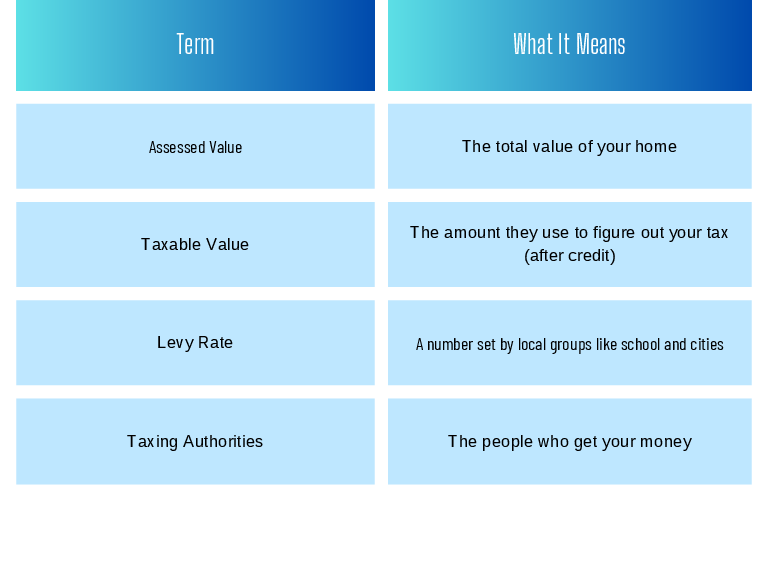
Porperty tax statements is a breakdown of the taxes you need to pay. It includes the Assessed Value, Taxable Value, Levy Rate and the Taxing Authorities.
Payment of Property Taxes
When Are Property Taxes Due?
Property taxes in Iowa are due in two installments:
- First Installment: Due by September 30th.
- Second Installment: Due by March 31st.
If the due date falls on a weekend or holiday, the deadline is extended to the next business day. Late payments will have a penalty of 1.5% per month, so always pay your taxes on time.
How to Pay Your Property Taxes
You have these options to pay your property taxes:
- Credit Card
- Debit Card
- ACH Debit/Credit
- Cash
Source: Iowa Department of Revenue.
Property Tax Credits and Exemptions
Iowa offers several programs to help reduce property tax burdens:
Homestead Tax Credit and Exemption
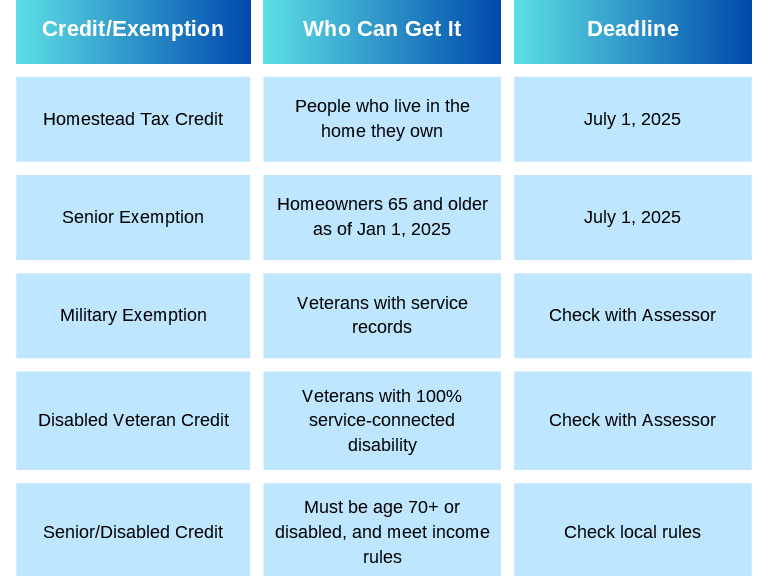
The Homestead Tax Credit; you must own and live in the property as your main home by July 1 each year, declare Iowa as your state of residence for income tax, and live in the home for at least six months each year. Military personnel or those in nursing homes who don’t live in the home are also eligible.
Military Service Exemption
This exemption reduces the taxable value of property for military veterans. The amount of the exemption varies, and to be eligible, you must own the property on July 1 of each year. Veterans need to file a claim with the local assessor by July 1 to qualify, but once approved, they don't need to file claims for the same property in subsequent years.
Other Available Credits
Additional credits and exemptions include:
- Disabled Veteran's Homestead Credit: For veterans with a service-connected disability rating of 100%.
- Senior and Disabled Citizen Property Tax Credit: Based on income eligibility for those aged 70 and above or disabled individuals.
Visit Iowa Department of Revenue for more
What to Do If You Disagree with Your Assessment
If you believe your property's assessed value is incorrect, you can:
- Informal Review: Contact your county assessor's office to discuss your concerns.
- Formal Protest: File a protest with the local Board of Review between April 2nd and April 30th.
- Appeal: If unsatisfied with the Board's decision, you can appeal to the Property Assessment Appeal Board or district court within 20 days of the Board's decision.
Resources for Iowa Homeowners
For more information and assistance:
- Iowa Department of Revenue: Offers comprehensive guides on property taxes.
- County Treasurer's Office: Provides localized information and payment options.
- County Assessor's Office: Assists with assessments and exemption applications.
Conclusion
Always make sure to file your taxes on time to avoid penalties on your property. As long as you have or rather you are the owner of the property then, you must pay property taxes each year.
FAQs
What happens if I miss a property tax payment?
A penalty of 1.5% per month is applied to late payments.
Can my property taxes change each year?
Yes, changes in assessed value or levy rates can affect your tax amount.
How do I apply for the Homestead Tax Credit?
Submit an application to your county assessor by July 1st.
Are there property tax benefits for veterans?
Yes, eligible veterans can apply for the Military Service Exemption.
What if I disagree with my property's assessed value?
You can appeal through an informal review or formal protest with your county assessor's office
Discover Amazing Sioux City Properties
Explore unique homes, commercial spaces, and investment opportunities in Sioux City. Find the perfect property to fit your lifestyle or business vision.
Browse Our ListingsRecent Blogs and Insights

How Much House Can I Afford?
Apply the 28/36 rule: spend up to 28% of gross income on housing and no more than 36% on total debt, including housing and other monthly obligations.
Read MoreHow Much House Can I Afford?
How to Determine the Value of Your Home Yourself
Compare recent sales of similar homes nearby, adjust for location perks or nuisances, and get a professional appraisal for an exact figure.
Read MoreHow to Determine the Value of Your Home Yourself
Are Home Improvements Tax Deductible? What Homeowners Should Know
The honest answer is mostly no, but with a few exceptions. The IRS doesn't lump all home-related spending into one category. Some of it counts as a repair, some of it counts as an improvement, and those two words matter a lot more than you'd think when it comes to what you can and can't write off.
Read MoreAre Home Improvements Tax Deductible? What Homeowners Should Know
All Your Money Going to the House? What House Poor Means
At its core, being house poor means you have just enough money to cover your house expenses, and not much else
Read MoreAll Your Money Going to the House? What House Poor Means
How To Price My House to Sell Quick
To price your house to sell quickly, start with a comparative market analysis (CMA), set a price slightly below similar homes, avoid overpricing because of personal bias, avoid pricing too low and creating suspicion, and make sure as many buyers as possible see your listing through social media, community groups, and online ads.
Read MoreHow To Price My House to Sell Quick
What Happens If I Don't Have Earnest Money?
Earnest money is a deposit that shows a seller you are serious about buying their home. While it is not legally required in every real estate transaction, most sellers expect buyers to include it when making an offer.
Read MoreWhat Happens If I Don't Have Earnest Money?
Can You Cancel a Real Estate Contract Without Penalties? Understanding Mutual Rescission
Mutual rescission is when the buyer and seller both agree to cancel a real estate purchase agreement. Instead of completing the sale, they decide together to end the contract before the transaction is finished.
Read MoreCan You Cancel a Real Estate Contract Without Penalties? Understanding Mutual Rescission
How Much Are Realtors Paid in Iowa?
The average total real estate commission in Iowa is around 5.84%, but the actual rate can vary depending on the agent, brokerage, property, and local market.
Read MoreHow Much Are Realtors Paid in Iowa?
What Is the 3-3-3 Rule in Real Estate?
The 3-3-3 rule in real estate is a simple guideline that helps homebuyers prepare for the financial responsibilities of owning a home.
Read MoreWhat Is the 3-3-3 Rule in Real Estate?
What Is an Assignment Contract in Real Estate and How Does It Work?
An assignment contract lets a buyer transfer their rights in a real estate deal to another buyer for an agreed fee or profit.
Read MoreWhat Is an Assignment Contract in Real Estate and How Does It Work?
What Is a Lease Agreement? Everything Renters and Landlords Should Know
A lease agreement is a legal contract between a landlord and tenant that explains rent, rules, and how long the property can be used.
Read MoreWhat Is a Lease Agreement? Everything Renters and Landlords Should Know
Can You Legally Ask Someone to Act on Your Behalf? Power of Attorney Explained
A power of attorney gives someone legal authority to act on another person’s behalf in financial, legal, or real estate matters.
Read MoreCan You Legally Ask Someone to Act on Your Behalf? Power of Attorney Explained