

What Happens to U.S. Real Estate When War Breaks Out?

Introduction:
War is something no one wants. But when it happens, even far from America, it can still change things here at home. One area that feels the effects is real estate.
When wars begin, people become unsure about the future. That feeling of fear or confusion may cause big changes in the way people buy and sell homes. In this blog, we’ll explain what happened to the U.S. housing market during the Russia-Ukraine war and tensions between the U.S. and Iran—and what it means for buyers, sellers, and investors.
How Quickly Does War Affect Real Estate?
War can affect the real estate market within days. But unlike stocks, which change prices fast, real estate reacts more slowly—usually over weeks or months. The first signs are often higher interest rates, changes in foreign investment, or rising prices for building materials.
Let’s look at two major examples to understand this better.
What Happened When the Russia-Ukraine War Began?
It was February 2022 when Russia invaded Ukraine. It was a huge global event. While the fighting didn’t happen in the U.S., the effects were felt here—especially in real estate.
1. People Looked for Safe Places to Invest
When war starts, people want safety. That includes safety for their money. The rich families with multiple investments across countries moved their money into the U.S. market while it was not particularly in the real estate industry.
2. Mortgage Rates Dipped and Increased
The war between Russia and Ukraine did not increase the mortgage rates in the U.S. Investors however were concerned about the consequences for the economy of their own countries, which led them to invest in U.S. Treasury bonds as a safety net.
There was a short-lived dip in the mortgage rates, but it wasn’t entirely because of this. But because it was of the Federal Reserve’s actions to combat inflation. And this led to a full percentage point increase from what it was a year before.
3. Building Got More Expensive
Ukraine exports Iron and Steel to the US, while Russia exports petroleum, platinum, and aluminum. All of which are important in the construction industry. Because of the war between the two, fuel prices significantly increased, which in turn increases transportation costs and in turn increased raw material prices. The metals needed became harder to get and more expensive as well
4. Buyers and Sellers Were Neutral
The war did not directly influence the behavior of buyers and sellers during this point, but buyers most likely decreased due to the increase of prices in newly built homes. Sellers, on the other hand, remained neutral.
5. Real Estate Stocks Were Not Affected
Other factors affected the U.S. real estate stocks, but not primarily because of the Ukraine-Russia war. Factors like increased inflation, increased raw materials and increased interest rates mainly because of the inflation were the main culprits of the shifts in U.S. real estate stocks, not because of the war.
However, investor confidence was affected, which caused them to shift towards assets like gold and other bonds
What About U.S.–Iran Tensions?
The U.S. and Iran have had a tense relationship for many years. It’s not a full war, but there have been big moments, like:
- The killing of Iranian General Qassem Soleimani in 2020
- Sanctions on Iran’s oil and banking systems
- Recent attacks in the Red Sea and threats from Iran-backed groups
Even though there’s no full conflict, these events still shake the real estate market in the U.S.
1. Oil Prices Went Up
Most U.S.–Iran tension affects oil. When things heat up, oil prices rise. That means people spend more on gas and energy.
This is also similar to what happened with the Ukraine-Russia war, where the oil prices increased, everything else also increased, which means an increase as well in the interest rates.
“This happens because when oil prices contribute to inflation, central banks respond by raising interest rates to curb inflation.” -Investopedia
2. Military Base Cities Stay Busy
When the U.S. gets involved in foreign conflicts, the military gears up. Cities near military bases—like San Diego, Norfolk, and Colorado Springs—often stay strong in home sales.
These places see steady demand from military families, defense workers, and contractors.
3. Sanctions Change Where People Invest
Investors make their move by looking to invest in U.S. real estate apart from other investments because the American market is seen as more stable, which makes it a safer place to invest, especially in real estate.
Even some U.S. investors pull money from stocks and put it into property when global tensions rise as a way of diversifying their investments, marking them safe during marketing uncertainty.
4. Fear Slows the Market
When people see war headlines or hear about global risks, they often wait before making big decisions. That includes buying a home.
This fear doesn’t crash the market, but it can cool it down for a few months.
What Does This Mean for the U.S. Housing Market Today?
Let’s sum up what these two situations taught us:
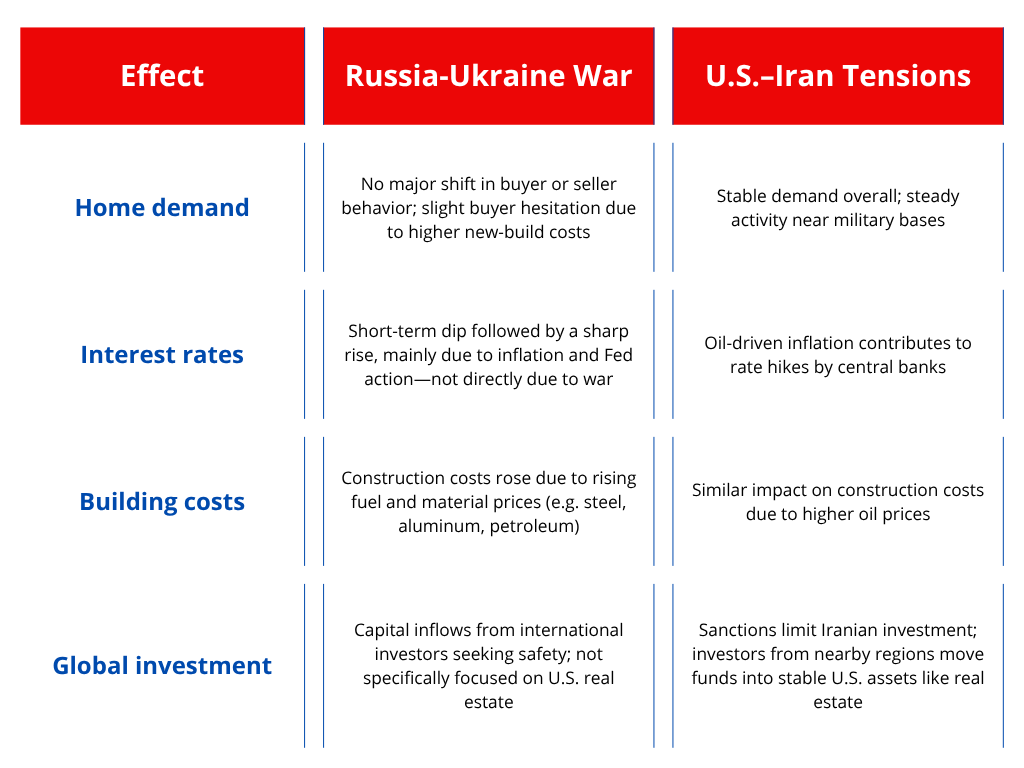
Bottom Line
War affects the housing industry in the United States because of the increase in oil prices and raw materials needed for construction. Countries like Russia and Ukraine are top contributors of the raw materials needed to sustain the real estate industry.
An increase in fuel prices drives the interest rates to go higher. This is because when fuel prices increase, it creates an increase as well in inflation, and in order for banks to curb the inflation, they increase the interest rates.
Discover Amazing Sioux City Properties
Explore unique homes, commercial spaces, and investment opportunities in Sioux City. Find the perfect property to fit your lifestyle or business vision.
Browse Our ListingsRecent Blogs and Insights

How Much House Can I Afford?
Apply the 28/36 rule: spend up to 28% of gross income on housing and no more than 36% on total debt, including housing and other monthly obligations.
Read MoreHow Much House Can I Afford?
How to Determine the Value of Your Home Yourself
Compare recent sales of similar homes nearby, adjust for location perks or nuisances, and get a professional appraisal for an exact figure.
Read MoreHow to Determine the Value of Your Home Yourself
Are Home Improvements Tax Deductible? What Homeowners Should Know
The honest answer is mostly no, but with a few exceptions. The IRS doesn't lump all home-related spending into one category. Some of it counts as a repair, some of it counts as an improvement, and those two words matter a lot more than you'd think when it comes to what you can and can't write off.
Read MoreAre Home Improvements Tax Deductible? What Homeowners Should Know
All Your Money Going to the House? What House Poor Means
At its core, being house poor means you have just enough money to cover your house expenses, and not much else
Read MoreAll Your Money Going to the House? What House Poor Means
How To Price My House to Sell Quick
To price your house to sell quickly, start with a comparative market analysis (CMA), set a price slightly below similar homes, avoid overpricing because of personal bias, avoid pricing too low and creating suspicion, and make sure as many buyers as possible see your listing through social media, community groups, and online ads.
Read MoreHow To Price My House to Sell Quick
What Happens If I Don't Have Earnest Money?
Earnest money is a deposit that shows a seller you are serious about buying their home. While it is not legally required in every real estate transaction, most sellers expect buyers to include it when making an offer.
Read MoreWhat Happens If I Don't Have Earnest Money?
Can You Cancel a Real Estate Contract Without Penalties? Understanding Mutual Rescission
Mutual rescission is when the buyer and seller both agree to cancel a real estate purchase agreement. Instead of completing the sale, they decide together to end the contract before the transaction is finished.
Read MoreCan You Cancel a Real Estate Contract Without Penalties? Understanding Mutual Rescission
How Much Are Realtors Paid in Iowa?
The average total real estate commission in Iowa is around 5.84%, but the actual rate can vary depending on the agent, brokerage, property, and local market.
Read MoreHow Much Are Realtors Paid in Iowa?
What Is the 3-3-3 Rule in Real Estate?
The 3-3-3 rule in real estate is a simple guideline that helps homebuyers prepare for the financial responsibilities of owning a home.
Read MoreWhat Is the 3-3-3 Rule in Real Estate?
What Is an Assignment Contract in Real Estate and How Does It Work?
An assignment contract lets a buyer transfer their rights in a real estate deal to another buyer for an agreed fee or profit.
Read MoreWhat Is an Assignment Contract in Real Estate and How Does It Work?
What Is a Lease Agreement? Everything Renters and Landlords Should Know
A lease agreement is a legal contract between a landlord and tenant that explains rent, rules, and how long the property can be used.
Read MoreWhat Is a Lease Agreement? Everything Renters and Landlords Should Know
Can You Legally Ask Someone to Act on Your Behalf? Power of Attorney Explained
A power of attorney gives someone legal authority to act on another person’s behalf in financial, legal, or real estate matters.
Read MoreCan You Legally Ask Someone to Act on Your Behalf? Power of Attorney Explained